

 chichen@chichenjiancai.com

The differences between container houses, quick-assembly container houses and packing containers
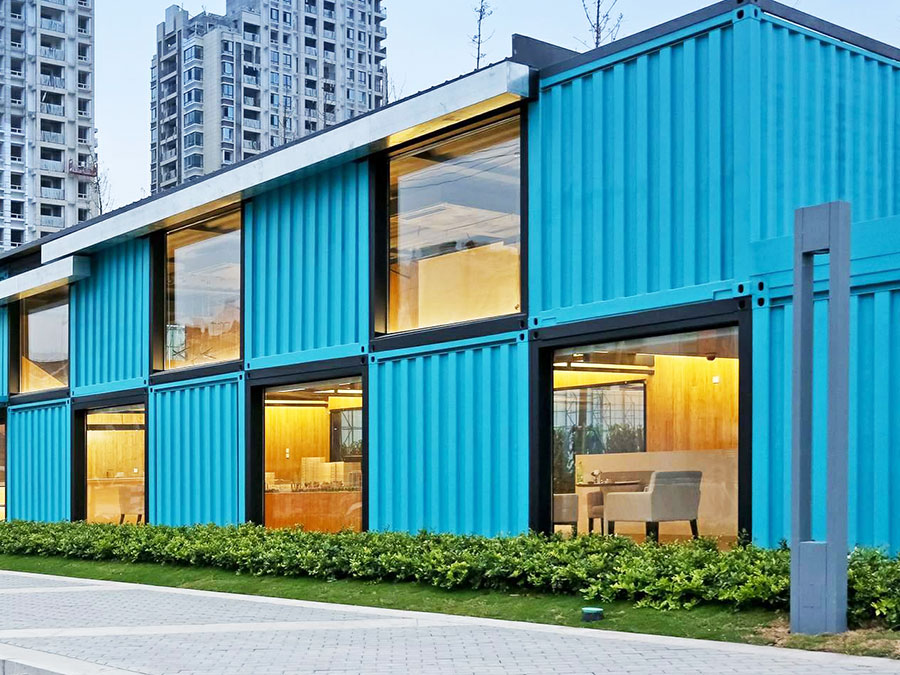
Container houses initially evolved from overseas containers. Nowadays, these corrugated container houses have many uses and can be used for living, as garbage rooms, special operation container houses, and so on.
If we only consider container houses for living, in fact, both quick assembly boxes and packing boxes fall under the category of container house products. It is only because of the continuous development of modern technology and the increasing demands for temporary residential buildings that container houses have been constantly improved in their manufacturing processes, thus being able to respond more quickly to the implementation of emergency projects, long-distance allocation, and cope with harsh environments, etc.
The assembly method of the quick assembly box is to build the bottom and the entire rectangular frame first, and then install the top. Each frame is tightly fastened with bolts. There is no drainage system. The drawback is that the on-site construction workload is slightly large, and the anti-leakage and anti-seepage effect is not ideal.
The packing box is a modular building product based on a steel frame and lightweight wall panel structural system. Both the top and bottom are fixed by welding process. The top, bottom and columns can be installed on site, which is faster and more convenient. Moreover, they can be packed and packaged, and the flat design is convenient for land or sea transportation. The top is equipped with an internal drainage channel, providing a better leak-proof effect.
At present, container houses are a type of modular temporary construction that is superior to quick assembly containers. It can meet the demands of construction sites, mobile cabin isolation rooms, field operation barracks, municipal resettlement houses and various commercial buildings. It features factory prefabrication, simplified on-site installation, flexible spatial combination, energy conservation and environmental protection, fire and leakage prevention, wind and earthquake resistance,